Im Derrück 12 · 76776 Neuburg am Rhein

Workshop appointments by arrangement

Skip the animation — go to the next step

The engine in detail

What happens inside your engine.And what we do about it.

A flat-six, drawn in section and in motion. First how it runs, then where it breaks, and finally how we strip it, measure it and build it back up. Scroll — the drawing moves with you.

The drawing shows a flat-six engine, schematic. Chain, oil and bearings follow the same rules at BMW, Mercedes-Benz and Audi.

Act I

How it runs.

The boxer layout and its four strokes — so that the failures make sense later.

Straight to Act II — where it breaks

01

The boxer

Each pair of pistons runs exactly opposite each other: both move outwards at the same time and back in again. Their inertia forces largely cancel out — that is why a boxer runs so smoothly.

Every 120° of crank rotation one of the six cylinders fires, in the order 1–6–2–4–3–5. In this section you see cylinder 1 on the right and cylinder 4 on the left; they fire exactly one revolution apart. The crankshaft in the middle turns the pistons' back-and-forth into rotation.

02

Four strokes, two revolutions

Now you turn it. Scrolling turns the crankshaft — two revolutions for one working cycle of cylinder 1.

The four strokes of cylinder 1

  1. 01Intake

    The piston moves inwards with the intake valve open: air and fuel flow in.

  2. 02Compression

    Both valves are closed and the piston squeezes the mixture.

  3. 03Power

    Just before top dead centre the plug fires; the pressure drives the piston inwards.

  4. 04Exhaust

    The exhaust valve is open and the piston pushes the exhaust gas out.

The camshafts turn at half crankshaft speed, so every valve opens once in two revolutions. If valves, rings or head gasket do not seal, this is exactly where pressure escapes — which is what the compression and leak-down tests in the diagnosis measure.

Act II

How it breaks.

Seven assemblies, each with its typical failure, the measurement we take and the service that puts it right.

Straight to Act III — how we rebuild it

03

Valve cover and camshaft

The gasket that leaks most often — and under it the camshaft.

What it does

The camshaft opens the valves via the rocker arms; the valve cover keeps the oil above them inside the head.

What fails here

  • A leaking valve cover gasket: oil on the exhaust, a burning smell after the drive
  • Worn cam lobes and rockers after oil starvation
  • Warped sealing faces after overheating

What we measure on it

Spec
Camshaft bearing clearance
0,025 – 0,066 mm
Camshaft end float
0,15 – 0,40 mm
Sealing face flatness
≤ 0,05 mm

What we do about it

04

Cylinder head

Valves, seats and guides — this is where the engine keeps its compression or loses it.

What it does

The head holds the combustion chamber, the valves, their seats and guides. As long as the valves close tightly, the engine keeps its compression.

What fails here

  • Recessed valve seats and leaking valves: lost compression
  • Worn valve guides: blue smoke on start-up
  • Cracks between the valve seats after overheating

What we measure on it

Spec
Valve guide clearance
0,03 – 0,08 mm
Valve seat width
1,5 – 2,0 mm
Sealing face flatness
≤ 0,05 mm

What we do about it

05

Cylinder and piston

Bore, piston and rings — where the oil consumption comes from.

What it does

The piston runs in the cylinder bore; its rings seal the combustion chamber from the crankcase and scrape the oil off the wall.

Drawn as an air-cooled flat-six. On the water-cooled 996 and 997 the cylinder looks different — the damage to the bore is the same.

What fails here

  • Scored cylinder bores, known on the water-cooled 996 and 997
  • Worn piston rings: oil consumption and blow-by
  • A seized piston after overheating or oil starvation

What we measure on it

Spec
Piston-to-bore clearance
0,02 – 0,05 mm
Bore out-of-round
≤ 0,01 mm
Ring end gap
0,20 – 0,40 mm

What we do about it

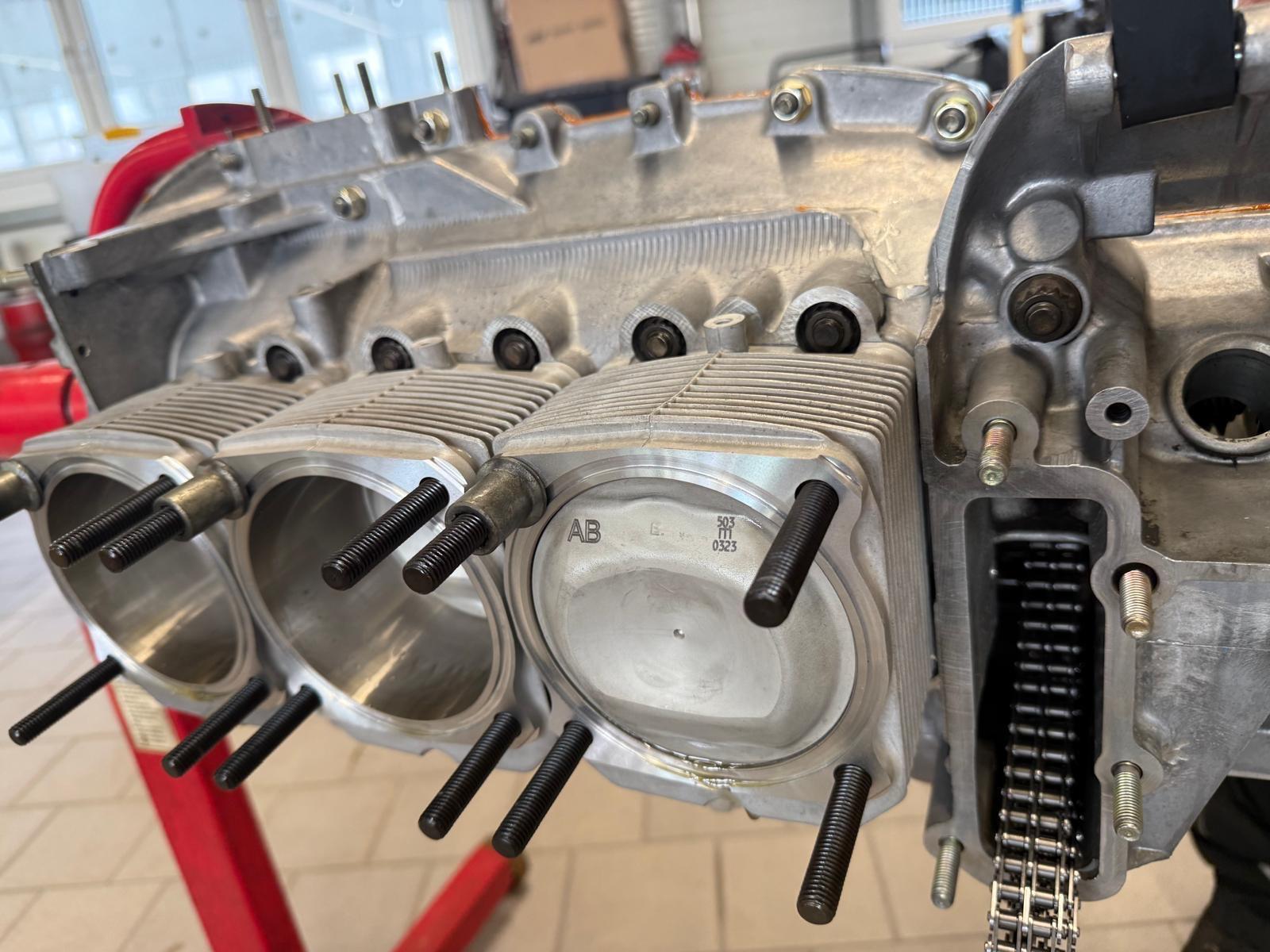
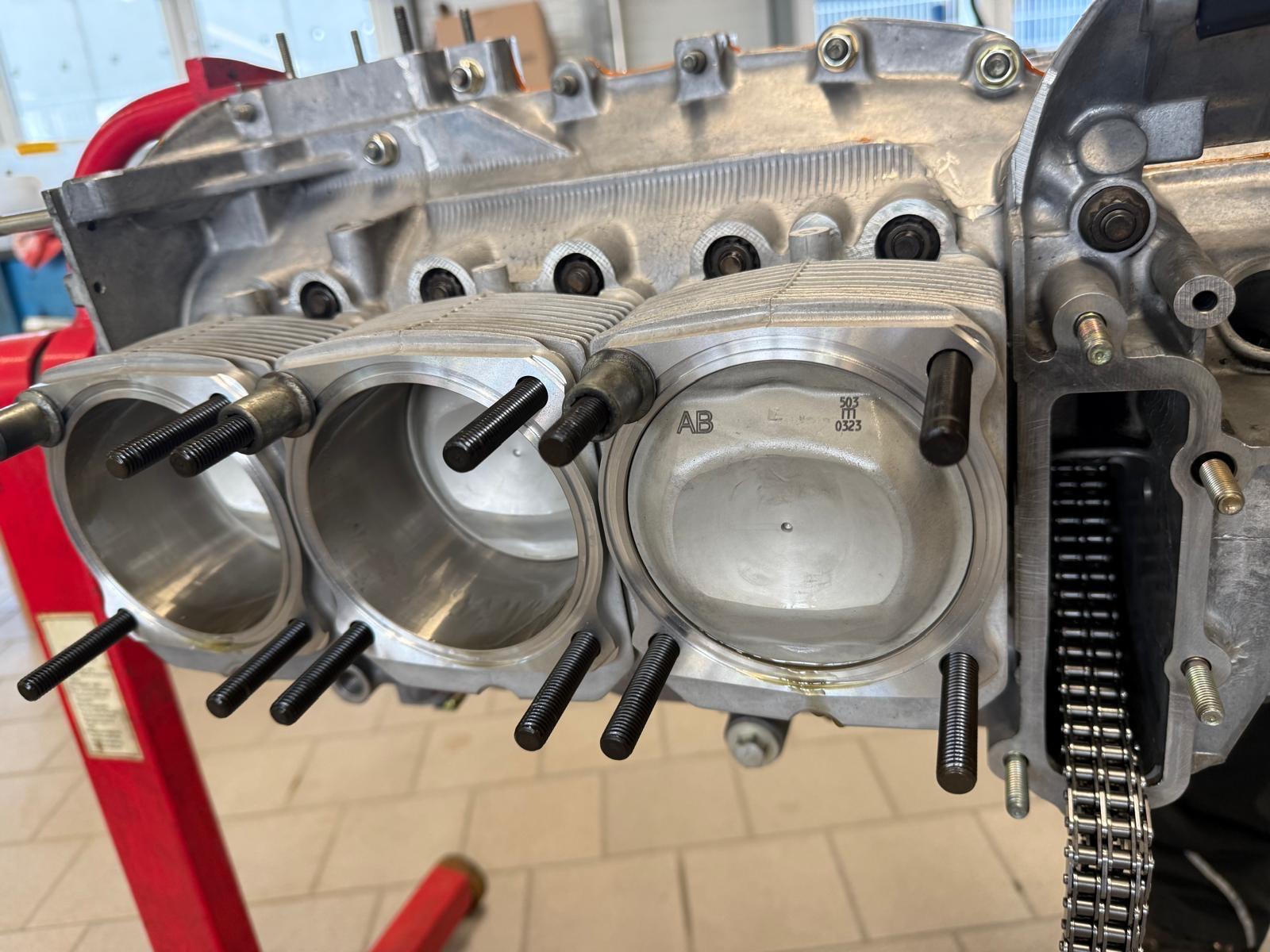
One cylinder bank of an air-cooled flat-six on the assembly stand: finned cylinders with head studs, a visible piston crown and the timing chain in the chain tunnel.
From the workshopFlat-six – cylinders with head studs
Mine sounds like this — describe the fault

06

Crankcase

The backbone: it carries the crankshaft and keeps everything in line.

What it does

The split case carries the crankshaft in its main bearings and keeps the cylinders and crank assembly in line.

What fails here

  • Pulled cylinder stud threads, typical of the 2.7
  • Worn main bearing bores after a bearing failure
  • A leaking case joint: oil between the halves

What we measure on it

Spec
Main bearing bore roundness
≤ 0,01 mm
Main bearing bore alignment
≤ 0,02 mm
Case joint flatness
≤ 0,03 mm

What we do about it

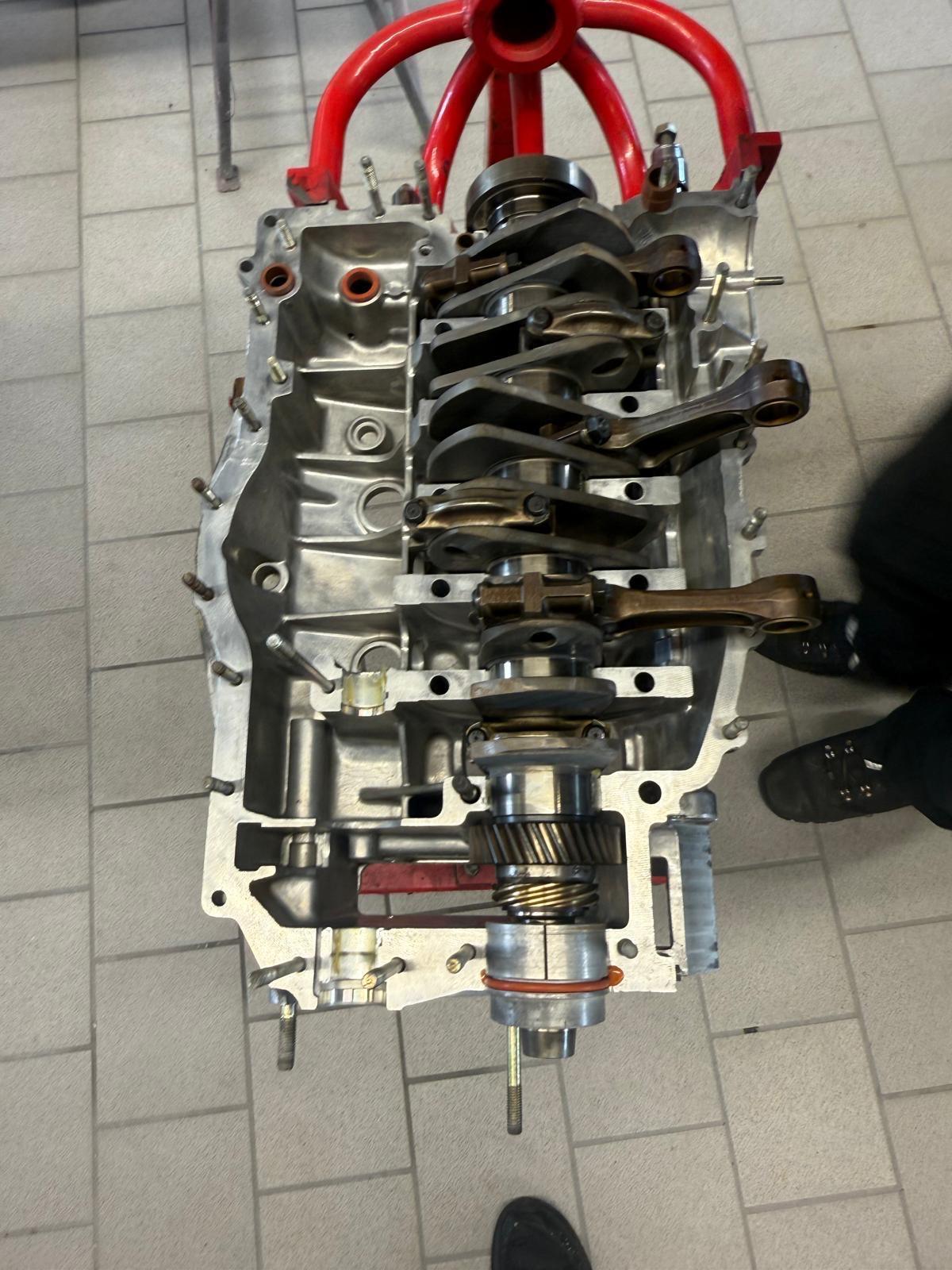
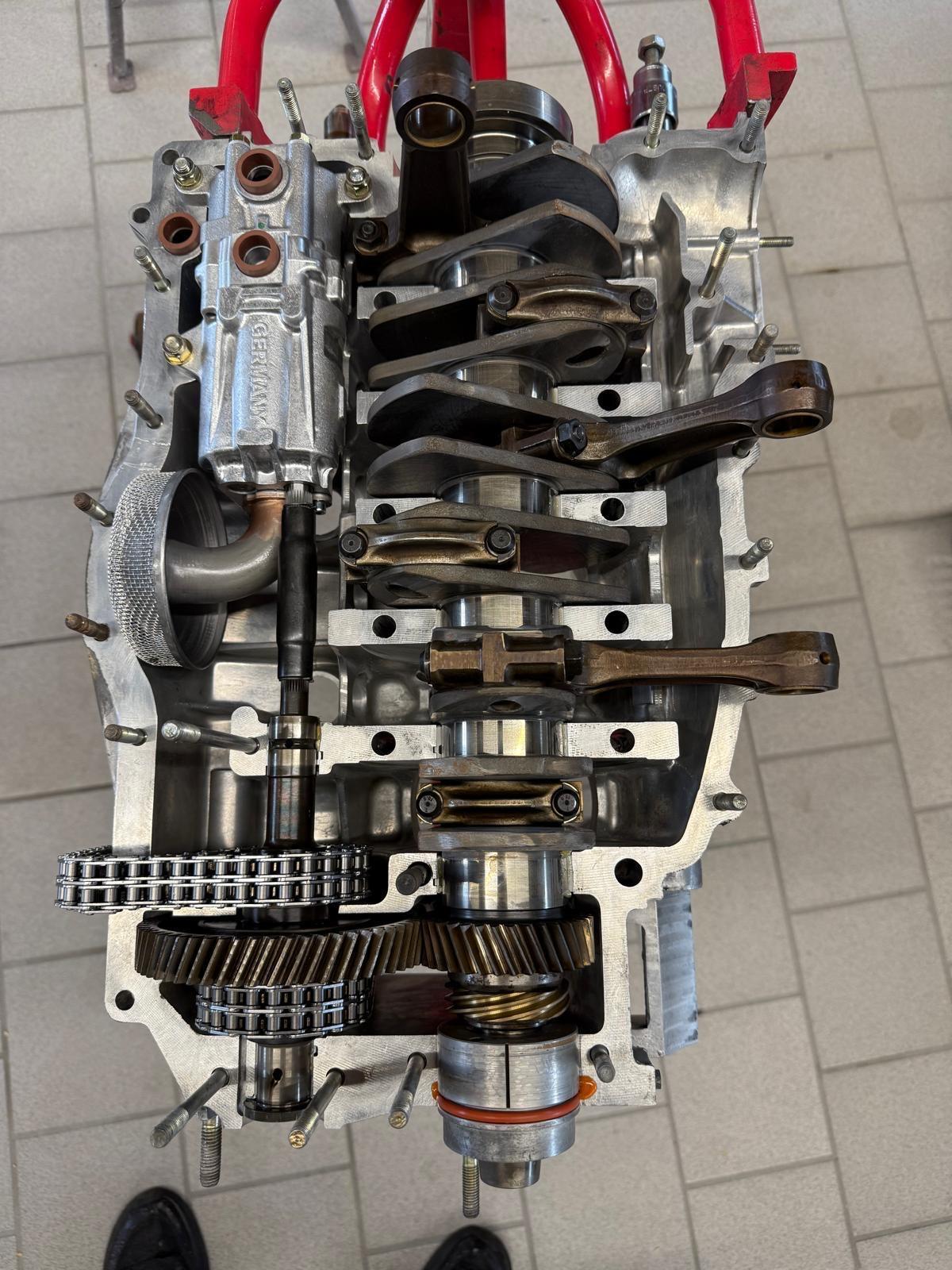
Split crankcase of a boxer engine with the crankshaft, connecting rods and twin timing chain drive still in place, standing on the workshop floor.
From the workshopBoxer engine – crankcase split open
Mine sounds like this — describe the fault

07

Crankshaft and connecting rods

The most expensive part in the engine, and the first to take offence at oil starvation.

What it does

The connecting rods carry the pistons' force to the crankshaft. It does not run on its bearing shells but on a film of oil thinner than a hair.

Worn bearings give the rod play: at every firing stroke it knocks — that is the knock under load. When oil pressure falls the film thins until it breaks; then steel runs on bearing metal.

What fails here

  • Bearing failure from oil starvation or debris in the circuit
  • Runout after overheating or a snapped chain
  • Worn big-end bearings, heard as knocking under load

Knocking under load, oil pressure dropping as it warms, bronze debris on the magnetic plug — do not drive on from here.

What we measure on it

Spec
Main bearing clearance
0,020 – 0,072 mm
Big-end clearance
0,028 – 0,072 mm
Runout, centre
≤ 0,040 mm
End float
0,110 – 0,182 mm

What we do about it

Open half of a boxer engine crankcase with the crankshaft in place, connecting rods attached and a helical-geared drive shaft fitted.
From the workshopCrankshaft and rods in the crankcase
Mine sounds like this — describe the fault

08

Timing chain and tensioners

It keeps the crank and the camshafts in step — once it stretches, it rattles.

What it does

The chain drives the camshafts at a ratio of 2 : 1: after two turns of the crankshaft the red marks line up again.

Every link wears a little; together the chain grows longer. The tensioner takes up the slack until it runs out of travel — then the camshafts lag behind and the valves open late.

Many tensioners work on engine oil pressure. In the first seconds after a cold start that pressure is missing and the chain slaps: the rattle.

The principle applies to every chain-driven engine — on the BMW N47 and N57 the chain drive sits on the gearbox side.

What fails here

  • A stretched chain: rattling on a cold start, camshaft timing faults
  • Worn tensioners and guide rails
  • A chain that has jumped: valves meet pistons

A cold-start rattle that lasts longer every week — do not drive far on it. A chain that jumps costs the engine.

What we measure on it

Spec
Chain elongation
≤ 0,6 %
Valve timing deviation
± 2° crank
Guide rail wear
≤ 1,0 mm

What we do about it

Air-cooled flat-six on the assembly stand: two open cylinders with bare bores, one fitted piston, and the timing chain in the crankcase chain tunnel.
From the workshopFlat-six – cylinder bores and timing chain
Mine sounds like this — describe the fault

09

Oil pump

No oil pressure, no bearings — the pump decides everything else.

What it does

The pump draws oil from the sump or the oil tank and forces it through the filter and galleries to every bearing, to the camshafts and to the chain tensioner.

Warm oil is thinner and the pressure drops — that is normal. With worn pump rotors it drops too far, and the bearings suffer first.

The pump is drawn schematically; where it sits differs from engine to engine.

What fails here

  • Worn pump gears: oil pressure drops once the engine is warm
  • Debris in the oil, carried into every bearing by the pump
  • A blocked pick-up screen after sludge

Oil pressure light on: switch the engine off at once and do not drive on, not even to the nearest workshop.

What we measure on it

Spec
Oil pressure at idle, warm
≥ 0,5 bar
Oil pressure at 5,000 rpm
≥ 4,5 bar
Gear backlash
0,05 – 0,15 mm

What we do about it

Act III

How we make it whole again.

Diagnosis, strip-down, measurement, assembly and test run — in that order.

To the next step

10

Diagnosis and strip-down

01Diagnosis

Only once the picture is clear do we talk about scope and cost.

Fault memory, compression and leak-down tests, borescope inspection of the cylinders, oil and filter checked for wear debris.

Checks
Fault memory · Compression · Leak-down · Borescope
Sign-off
Scope and cost only after the diagnosis

02Removal and strip-down

Engine and gearbox come out of the car and onto the engine stand.

The strip is complete: crankcase, crank assembly and cylinder heads end up in front of us as cleaned individual parts.

Stripped
Crankcase · Crank assembly · Cylinder heads
Condition
Cleaned individual parts on the stand

2–3 days

to the written strip-down report, credited against the job

Describe the fault
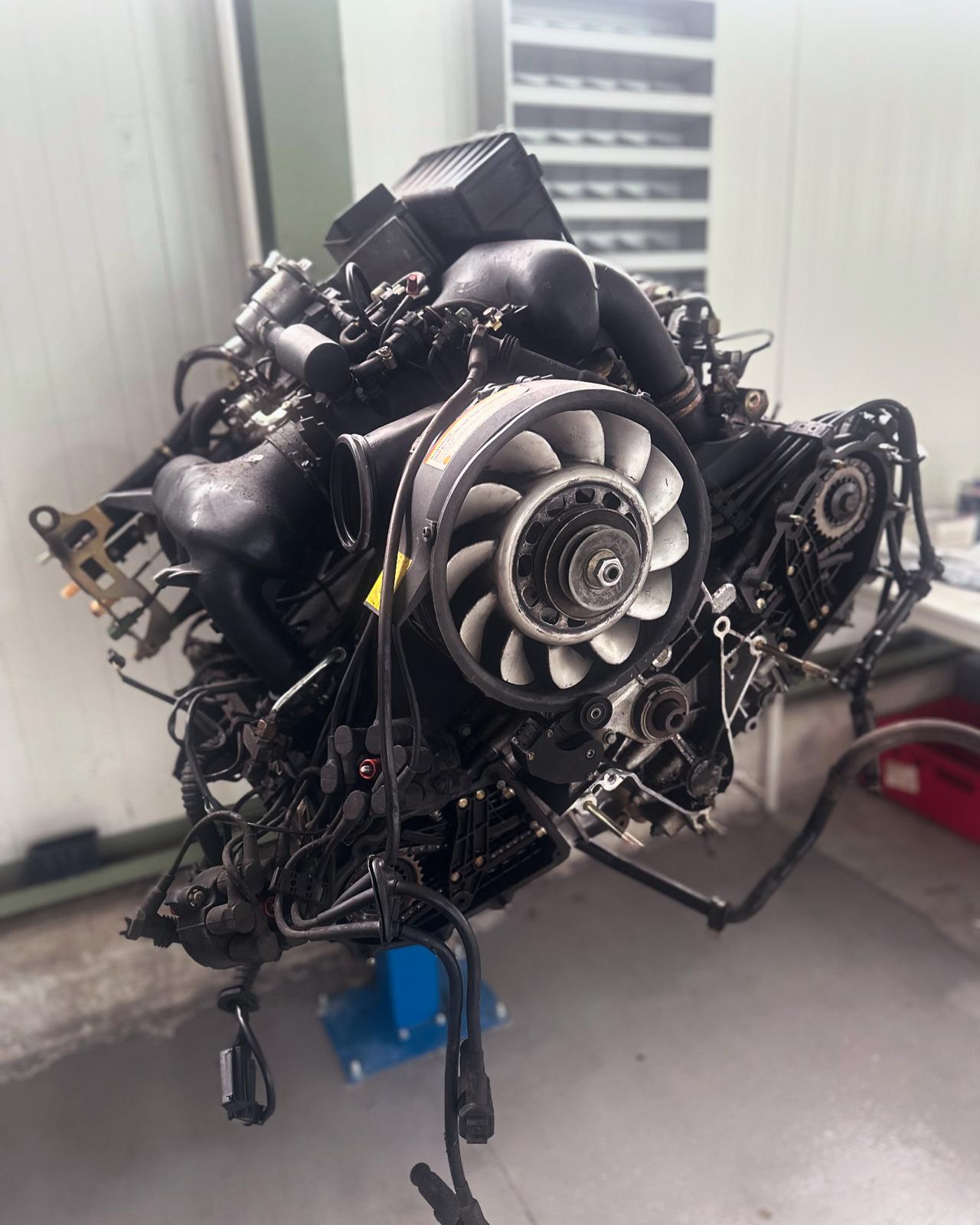
Complete air-cooled six-cylinder boxer engine with cooling fan, alternator and intake system, removed from the car and set down on a stand in the workshop.
From the workshopAir-cooled flat-six, removed complete

11

Measurement

03Measurement

Every figure is written down and compared against the manufacturer's specification.

Crankshaft and connecting rods for size and runout, bearing clearances, cylinder bores, flatness of the mating faces, valve guides and valve seats.

Check points
Bores · Bearing clearances · Runout · Mating faces
Reference
Every figure against the manufacturer's specification
Measurement record
Check pointSpecActual
Main bearing clearance0,020 – 0,072 mmmeasured on the engine
Big-end clearance0,028 – 0,072 mmmeasured on the engine
Runout, centre≤ 0,040 mmmeasured on the engine
Piston-to-bore clearance0,02 – 0,05 mmmeasured on the engine
Bore out-of-round≤ 0,01 mmmeasured on the engine
Valve guide clearance0,03 – 0,08 mmmeasured on the engine
Chain elongation≤ 0,6 %measured on the engine
Oil pressure at idle, warm≥ 0,5 barmeasured on the engine

Every spec figure is taken from the manufacturer's documentation, never estimated

12

Assembly and test run

04Repair and assembly

What goes in is what the measurements call for, not what happens to be on the shelf.

Bores honed, mating faces skimmed, valve seats recut, plus bearings, piston rings, chains, tensioners and gaskets renewed as complete sets. Assembly in clean surroundings, every fastener to torque and angle, the clearances checked a second time before anything is closed up.
Renewed
Bearings · Piston rings · Chains · Tensioners · Gaskets
Tightening
Torque and angle, valve timing with the specified locking tools

05Test run and handover

Once refitted, oil pressure and leak checks, warm-up and a road test.

You receive the documentation of the work and a clear word on the running-in period, including the first oil change.

Checks
Oil pressure · Leaks · Warm-up · Road test
Handover
Documentation of the work, a word on running in
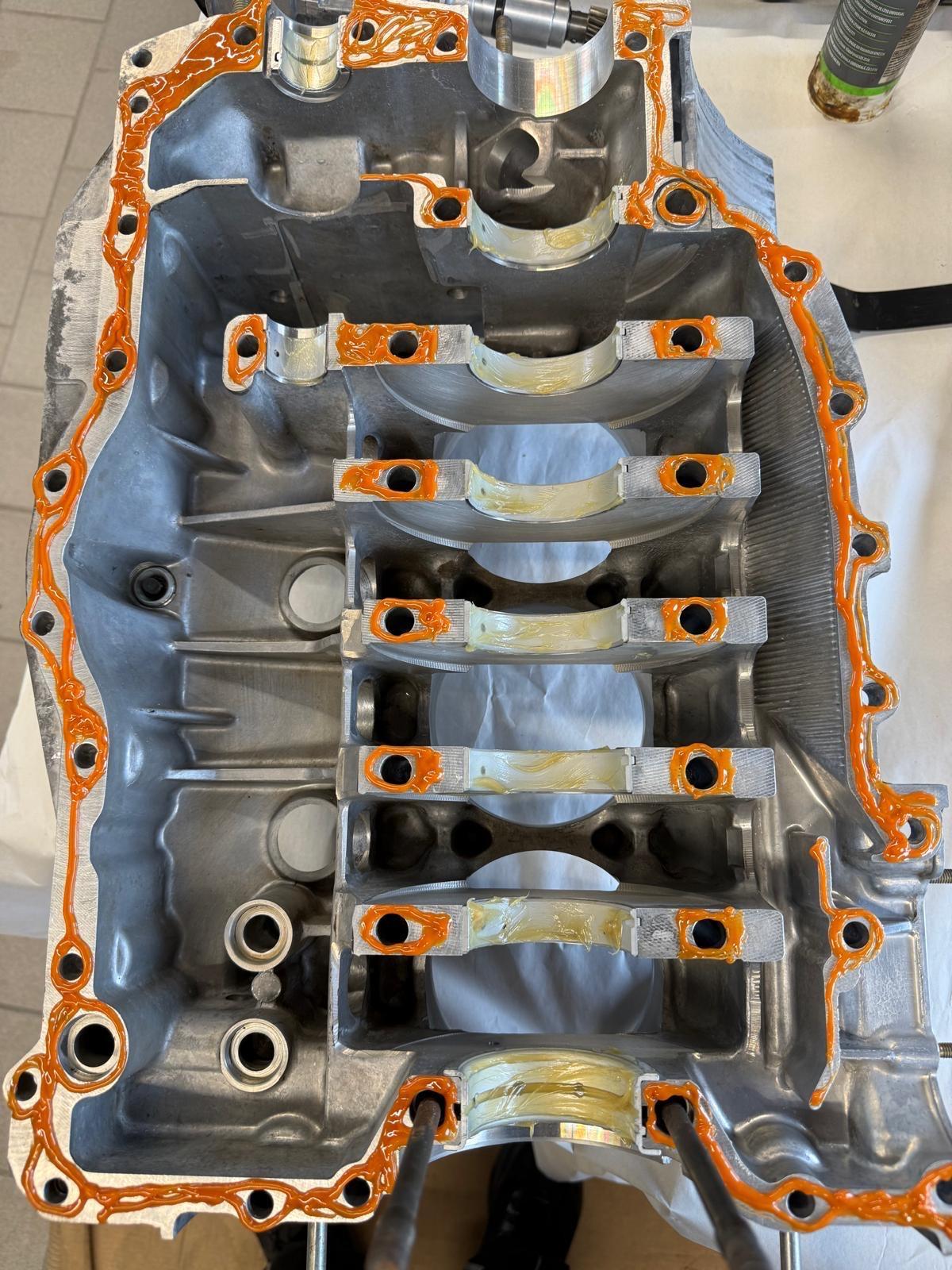
Open crankcase with bolted main bearing caps, new plain bearing shells coated in assembly lube and a fresh bead of sealant along the parting face.
From the workshopCrankcase – new main bearing shells fitted
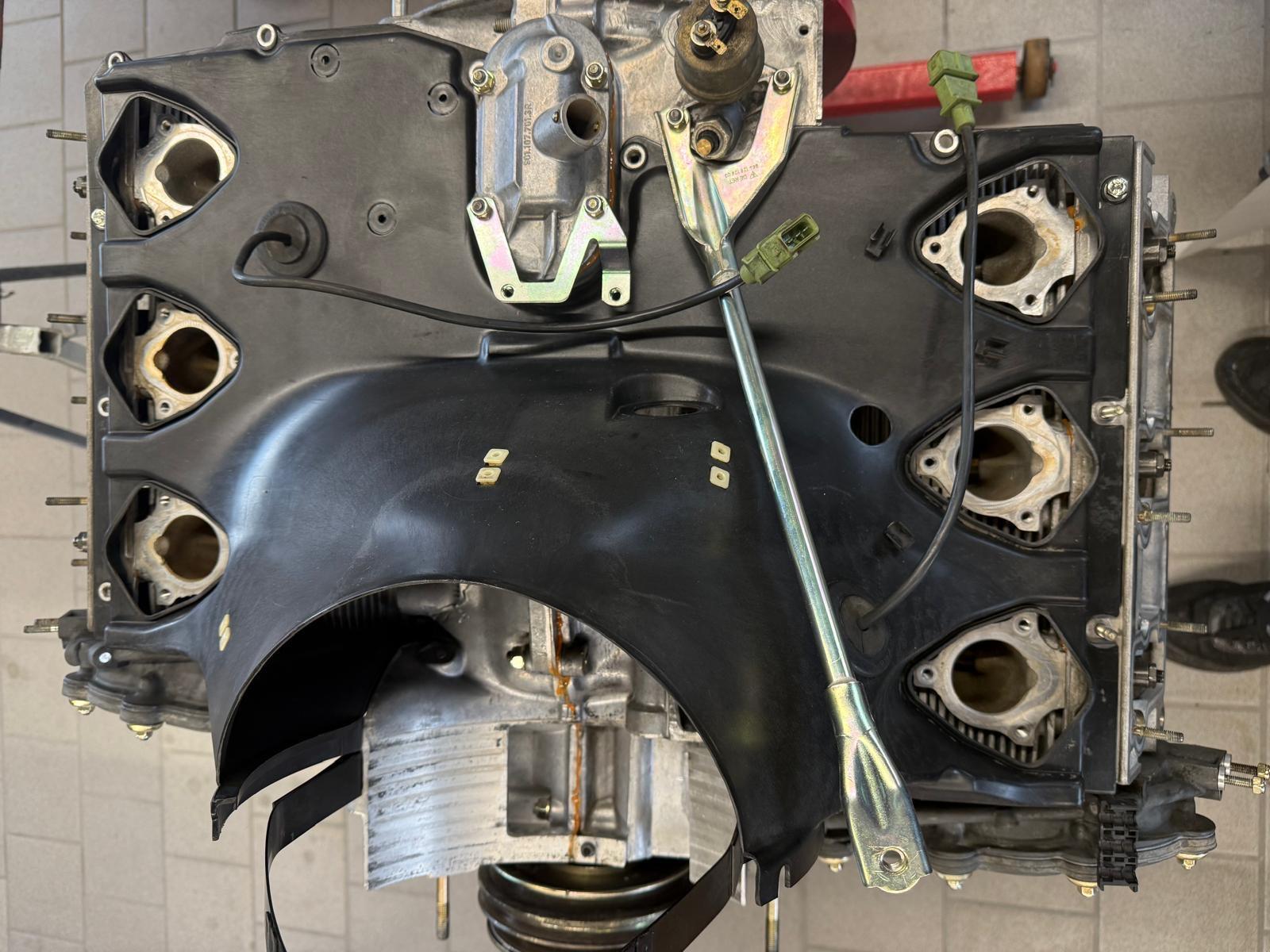
Largely assembled air-cooled six-cylinder boxer engine with its cooling ducting fitted; the intake openings on the cylinder heads are still open.
From the workshopAir-cooled boxer engine – cooling ducting fitted
Flat-six engine in section, schematicFlat-six engine sectioned through the crankshaft axis, running slowly; ignition alternates between cylinder 1 on the right and cylinder 4 on the left.

Next step

Your engine.
Your next step.

Describe the fault

Describe in a few steps what you hear and see, and since when. The more precise the description, the more useful the first assessment.

Describe the fault

Fault reported, cause to be found

Describe the fault.
We will tell you what to do.

Rattling on a cold start, swarf in the filter, a crunch going into gear — the more precise the description, the more useful the first assessment.

CallWhatsApp