Service 11 of 11
Diagnostics and fault finding
A fault code rarely names the failed component, only the area in which something is wrong. We read the codes, look at live values while the engine runs, and narrow it down with compression, leak-down and borescope checks until we know where the fault actually sits.
Nothing is replaced until the cause is established. If it lies inside the engine or gearbox, the next step — with your approval — is the strip-down report: stripped, measured and documented in writing within two to three days.
Symptoms
Where fault finding usually starts
Engine warning light on
Steady amber: have it looked at soon. Flashing means a cylinder is misfiring — ease off and do not drive far.
Limp mode, lost power
The engine management cuts power to prevent damage. The reason is in the fault memory; the cause is not always.
Misfires, rough running
Ignition, injection, an air leak or a cylinder that no longer holds compression. Live values and a compression test tell them apart.
Oil consumption, blue smoke
Piston rings, valve stem seals, crankcase ventilation or the turbocharger. Leak-down, borescope and a look into the intake narrow it down without opening the engine.
Faults that come and go
Intermittent faults rarely appear on demand. We look at the conditions under which the entry was logged and try to reproduce it on a road test.
The light is on — now what?
Send a photo of the instrument cluster and, if you have it, the code you read out. If the red oil-pressure light is on: engine off at once.
Send a photo
Scope
How we narrow it down
Every check rules something out. At the end there is a cause that can be shown — and only then a part.
- Fault memory read, entries assessed with their freeze-frame conditions
- Live values at a standstill and on the road test
- Wiring, connectors and earth connections measured through
- Compression test on every cylinder
- Leak-down test: valves, piston rings or head gasket?
- Borescope inspection of the cylinders without stripping the engine
- Oil and filter checked for wear debris
- Cause and proposed repair before anything is replaced
Method
Four steps
- 01
Listen
What you have noticed: when, how often, with the engine cold or warm.
- 02
Read and measure
Fault memory, live values, a road test under the conditions in which the fault appears.
- 03
Narrow down
Compression, leak-down, borescope, electrical checks — until the cause is established.
- 04
Result
Cause, scope and cost, labour and parts separately. No part without your yes.
Questions about it
What people ask about fault finding
My own code reader shows a code — isn't that enough?
The code says where the engine management noticed something, not what has failed. A mixture fault can come from a leak in the intake, from a sensor or from an injector. Replace by code and you often replace the wrong part, and the fault comes back. Send the code anyway — as a starting point it is valuable.
Can I keep driving with the engine warning light on?
If it is steady amber and the car drives normally, you can usually drive on until the appointment — but not for weeks. If it flashes, a cylinder is misfiring and unburnt fuel can destroy the catalytic converter: ease off and have it checked straight away, and if you are far away, have it towed. If the red oil-pressure light is on, switch the engine off at once and do not drive on.
What does fault finding cost?
With warning lights and electrical faults, the effort depends on how quickly the cause can be narrowed down. We agree beforehand where we start, and come back to you before going further. If the cause lies inside the engine or gearbox, the next step — with your approval — is the strip-down report: stripping, measuring and written documentation. We give you its price beforehand; if you then place the job, it is credited in full.
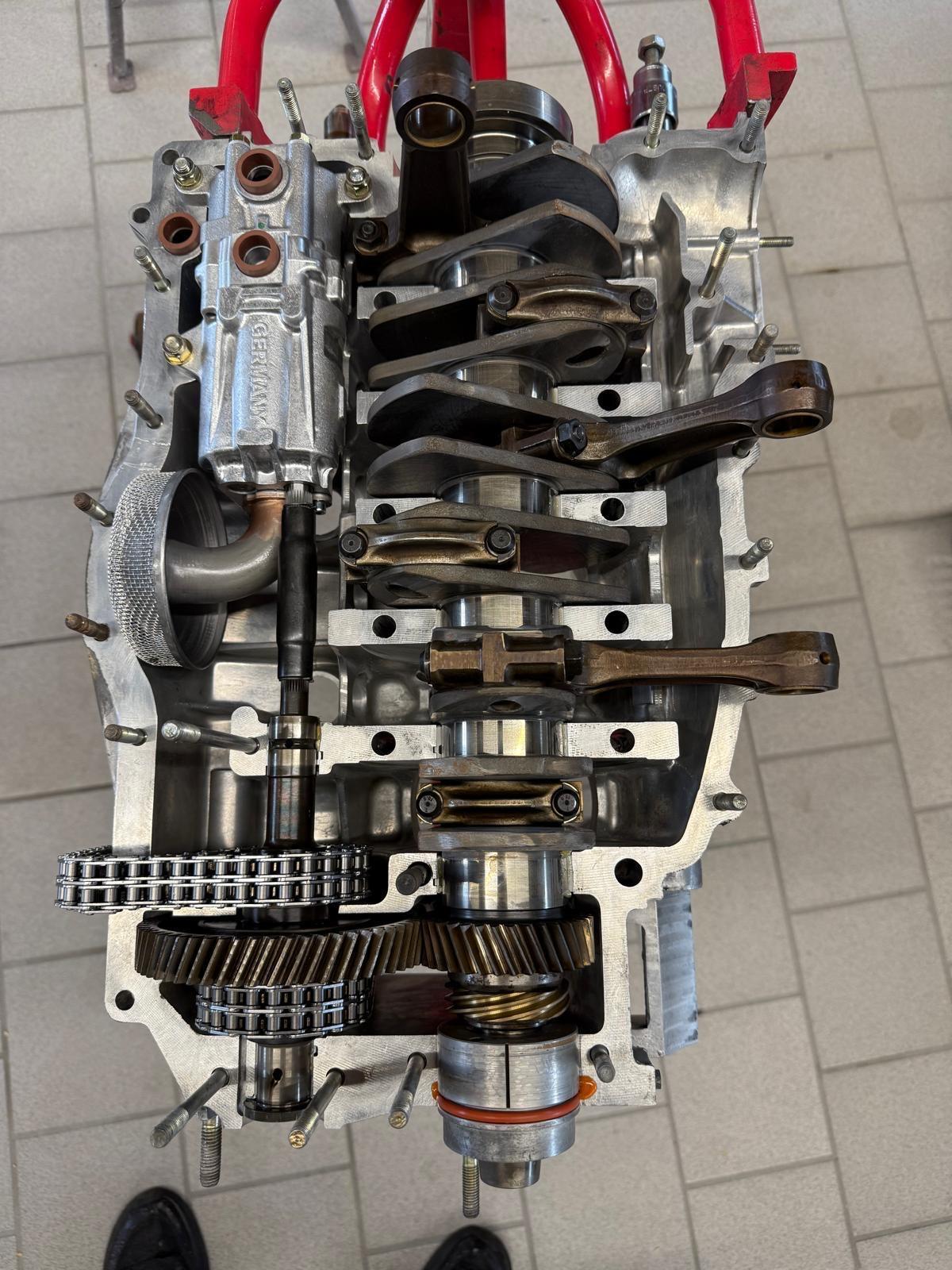
Diagnostics and fault finding
Something lit up on the dash?
Measure first, replace after.
Related
Related services
- 03
Timing chain replacement
Fault codes for camshaft position can point to a stretched chain.
- 04
Engine repair
When compression and leak-down confirm the damage is inside the engine.
- 10
Repairs and maintenance
Once the cause is established, the repair follows — on all common makes.